A gift does not become personal merely by containing lots of names or photographs. It feels personal when its selection reveals why these particular memories belong to this particular person. For grandparents, a small and coherent collection is often more moving than an overloaded photo product.
Start with a genuine connection
Choose one thread: a child’s artwork from a year, one family’s handwritten recipes, shared Sundays, or letters from a particular period. A narrow frame makes selection easier and gives the gift a story the recipient can recognise.
Ask of each item: will the recipient understand why it is here? Is there one sentence of context that opens the memory? If not, save it for a different project rather than forcing it in.
Three collections that hold together
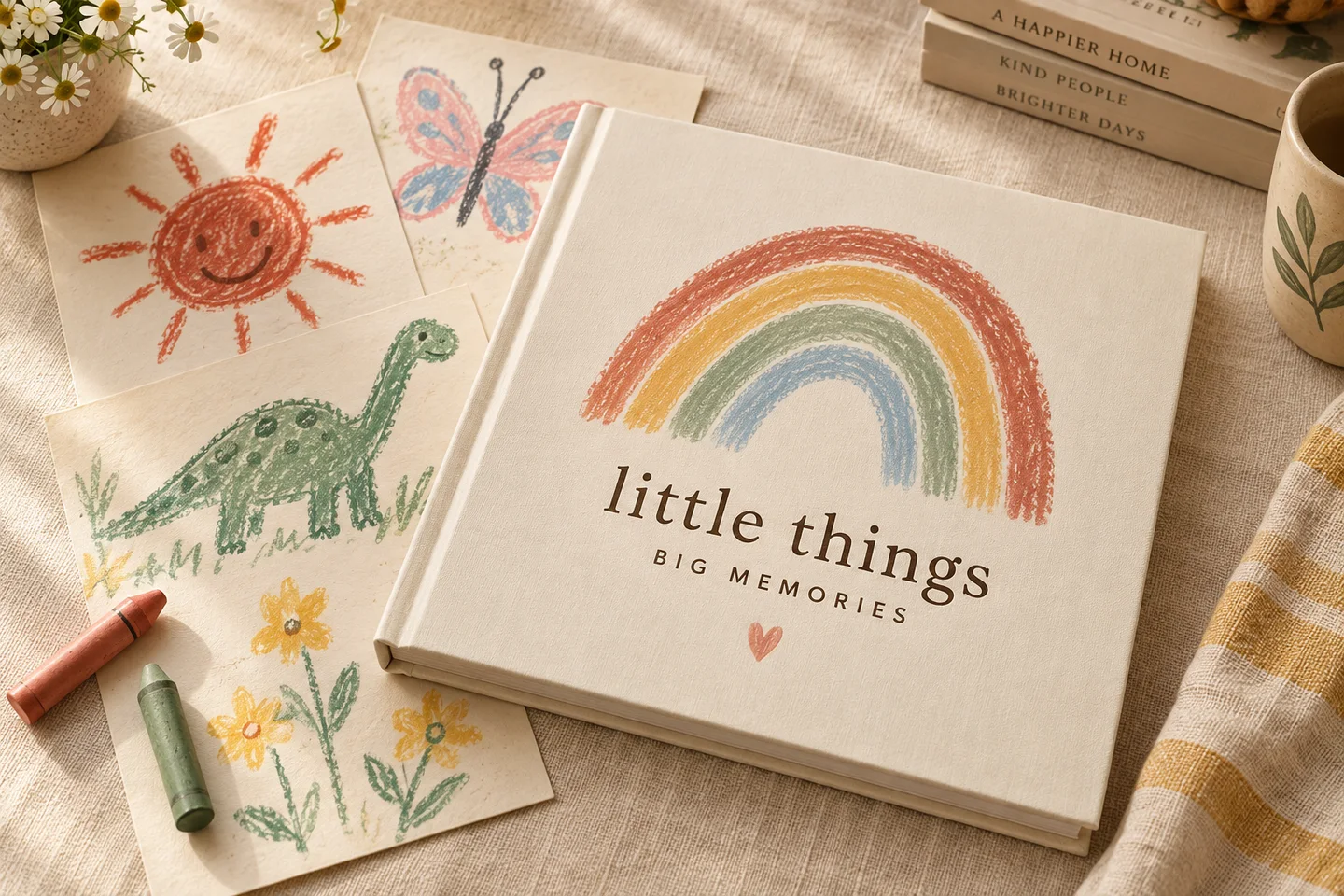
A children’s art book preserves the original work and needs only restrained captions: first name or nickname, age, date, and perhaps the child’s own short description. A family cookbook places recipe cards beside readable transcriptions and memories of shared meals. A photo book is strongest when it tells one chapter instead of attempting to reproduce an entire camera roll.
You can mix materials when the organising idea remains clear. A book about “Summers with Grandma and Grandpa” might contain garden photographs, painted flowers, and the pancake recipe. The connection is the shared place, not the file format.
Consent is part of care
Keep photographs of children and private letters in a genuinely private setting. Adults pictured should know how their images will be used. Be especially cautious with health details, addresses, school documents, or intimate correspondence. Not every important memory needs to be printed.
Set a realistic schedule
Start four to six weeks before the occasion. Allow time for selection, questions, a digital proof, production, and shipping. Christmas and other peaks require more margin. A digital announcement can help after a delay, but it does not replace an honest delivery estimate.
If practical, order one copy to inspect before distributing several. Check names, years, trim edges, and very dark photographs. Keep delivery details separate from the memory files until an order is actually placed.
The Kids’ Art Book from Kept in Pages preserves drawings as a hardcover or digital edition. Your originals stay at home. Start with a free preview of up to three artworks; a hardcover needs at least ten suitable artworks.
Common questions
How long should a gift book be?
As long as its theme can support. A considered book of 25 works can be more affecting than a random collection of 100 pages.
Can the recipient help choose?
Yes. Shared selection does not remove the surprise; it can prevent unwanted or embarrassing material from appearing.
What belongs on the opening page?
A short dedication with the occasion and year is enough. Write from your own perspective instead of making grand claims about somebody else’s feelings.