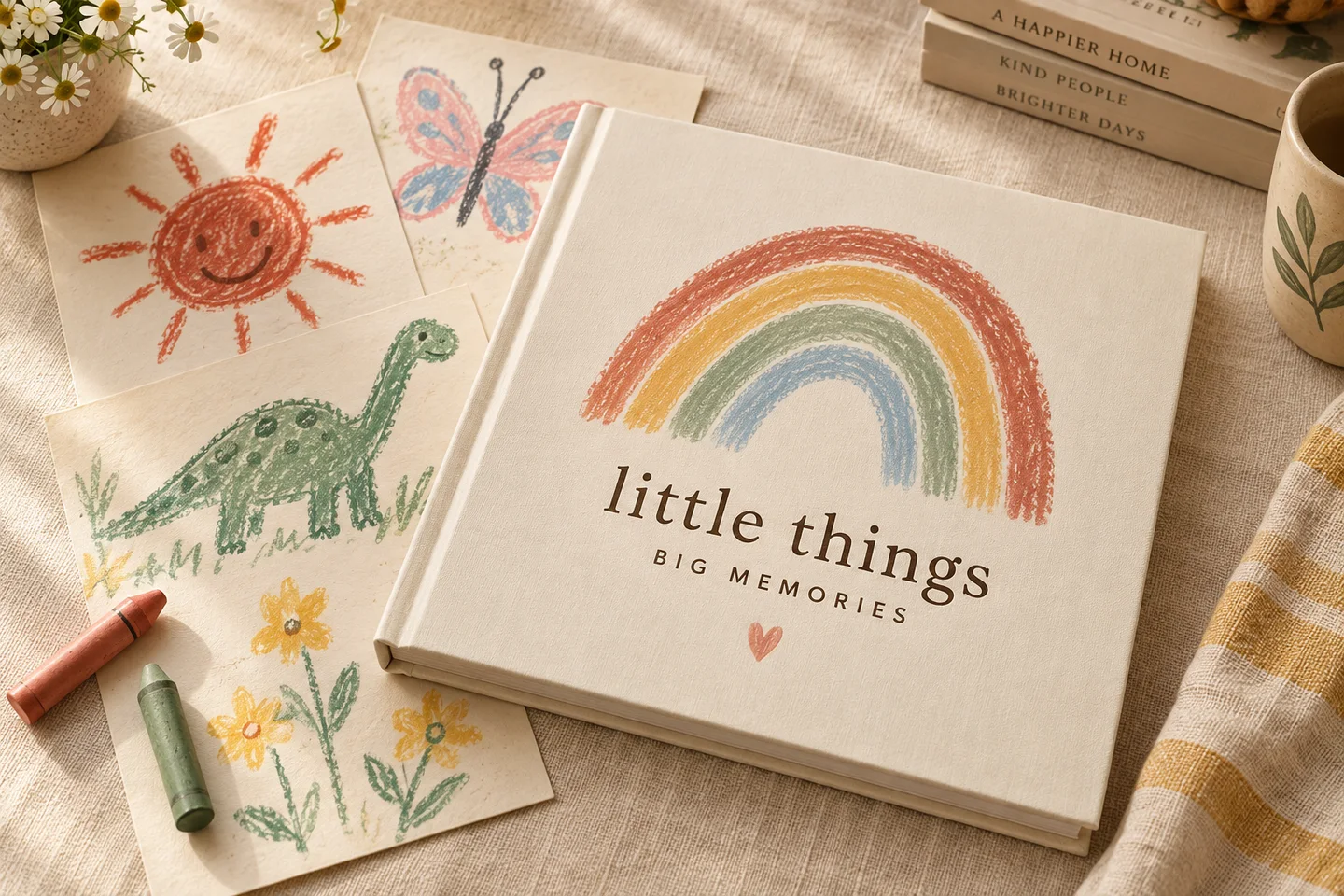
Some children’s paintings deserve to remain as originals. The surface may matter, a particular story may be attached to the work, or it may simply feel irreplaceable. This small selection does not need museum storage, but a few reliable principles protect paper and colour much better than an overfilled, damp craft box.
These are general storage practices, not a conservation assessment. Ask a qualified conservator about valuable, already damaged or unusually constructed work.
Light is the most visible risk
Direct sunlight fades many colours and can yellow paper. Bright artificial light also has an effect over time. Do not hang a favourite work permanently in a sunny window. Rotate displayed pieces and keep the rest in the dark.
UV-filtering glazing can reduce exposure but cannot stop every ageing process. Distance from direct sun and limited display time matter more. Photograph a work before a long period on display so its current condition is documented.
Keep temperature and humidity reasonably stable
Paper responds badly to damp rooms and large fluctuations. Cellars, unfinished lofts, garages and positions against cold external walls are often poor choices. Moisture encourages mould and swelling; very dry heat can make paper brittle.
A normally occupied room is usually better. Keep boxes off the floor and away from radiators or water pipes. If a drawing smells musty, shows spots or has become wet, separate it from the collection and seek advice before placing it in a closed box.
Use suitable folders and interleaving
Acid-free archival folders and boxes are a sound basis. They should be slightly larger than the work so edges do not bend. Do not fill a box until pressure marks appear.
Archive-safe interleaving protects delicate surfaces. Ordinary gift-wrapping tissue may contain dyes or unsuitable additives. Clear sleeves made from unknown plastic age in different ways; material identified as PVC-free and suitable for archival use is preferable to a general office wallet.
Remove paperclips, rusting staples, rubber bands and sticky notes. Adhesive can move, stain and attach to the next drawing. Label a sleeve or separate sheet instead.
Store only fully dry work
Watercolour, thick poster paint and glue can take longer to dry than expected. Closing damp work inside a box may make sheets stick or develop mould. Let new work dry flat in a protected place.
Pastel, charcoal and chalk may rub away. Fixative changes colour and surface and is not always stable. Do not spray it automatically. Suitable interleaving and minimal movement are safer default measures.
Roll only when flat storage is impossible
Large paper work is best stored flat. Tight rolling creates a persistent curl and may crack thick paint. If a work must be rolled, use a large archival-quality core and avoid rolling the image inward around a small diameter.
Folded work should not be repeatedly opened and closed. Photograph it open and retain the original fold only where the fold is part of the work.
Photograph before storage
A good photograph cannot replace the material surface, but it does three useful things: records condition, creates a digital backup and allows the work to be seen without repeatedly opening the box.
Use indirect light, hold the camera parallel and show every edge. Add a second angled view for thick paint or collage. This phone photography guide explains the setup.
Remove location data from working copies unless it is deliberately needed. Keep high-resolution originals in at least two separate places. A public gallery is unnecessary; private storage is the appropriate default.
What belongs in the book and what stays in the box?
The book and original box have different jobs. The box is for work whose physical material you want to preserve. The book is for the broader narrative selection you want people actually to see.
A book image should not crop the drawing to fill a page. Varied proportions deserve white space. Digital preparation should correct only the photograph, never reinvent colour, line or subject. A Kids’ Art Book can therefore reduce the physical collection without pretending to replace every original completely.
Make one annual check
Open the archive box roughly once a year in a clean, dry place. Ask:
- does anything smell musty or unusual?
- are there new spots or discolouration?
- have sheets stuck together?
- are metal parts rusting?
- has the box become too full?
- do the digital backups still open?
Respond early to change. Do not treat damaged work with household cleaner, adhesive tape or improvised bleach.
Frequently asked questions
Is lamination a good idea?
Usually not for long-term storage. Film and adhesive are difficult to reverse, may age and create strong glare. An archive-safe sleeve protects without permanently sealing the original.
Can I use hairspray to fix chalk?
Hairspray is not designed for paper conservation and may yellow or become sticky. For chalk and pastel, suitable interleaving is normally safer than a household spray.
Does every drawing need its own sleeve?
No. Stable, dry paper can sit with suitable interleaving in a correctly sized box. Fragile, sticky or powdery surfaces need more separation.
Store the small group of materially important originals well, then make the broader selection visible in a book. Preservation need not mean keeping every pile forever.